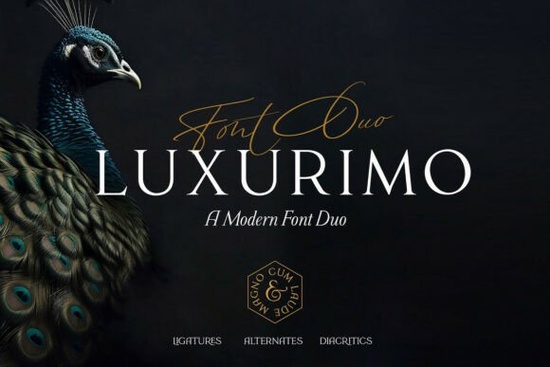
If you need a typeface that balances clean structure with organic movement, the Luxurimo Font handles that split effectively. It combines a straightforward serif face with a matching handwriting style in one package, letting creators build clear visual hierarchies without juggling multiple downloads. It works smoothly for invitations, labels, and social templates since each style manages different reading tasks clearly.
What actually separates this dual-style set from standard commercial fonts?
Most bundles force you to choose between rigid letterforms and decorative flourishes. This set divides those duties deliberately. The serif portion carries body copy and structural details, while the script handles accents, quotes, and short headlines. That division keeps designs legible when printed at smaller sizes or stretched across wide packaging panels. Sellers who publish printable files often notice fewer customer complaints about readability when they apply this separation strategy instead of relying on a single display font for everything.
How do you pair the straight lines with the flowing handwriting without creating clutter?
The method relies on controlling weight and spacing rather than forcing both styles to compete. Keep the serif text at a comfortable reading size and reserve the script for fragments that do not need heavy scanning. Leave extra breathing room around handwritten elements so the ink strokes do not collide with nearby lines. If you are designing templates for online marketplaces, test how the combination appears against busy backgrounds before finalizing the file. Comparing other editorial-ready pairs shows how spacing habits change final exports. Lower stroke weights usually preserve clarity better than thick fills when blending styles.
Which project types benefit most from this layout approach?
Crafters and small retailers typically find value in projects that demand quick brand recognition while still feeling personal. Wedding stationery stands out immediately because the serif handles dates, names, and venue details cleanly, while the script adds warmth to titles and RSVP notes. Packaging works well since compact footprints allow designers to stack information vertically without crowding margins. Social media cards follow the same rule: let the structured letters hold captions and calls to action, then drop the flowing style over patterns or solid backgrounds. For sellers exploring broader typography options, browsing alternative classic pairings helps you compare proportions, while visiting this curated folder keeps your asset library organized. Boutique shop banners and minimalist fashion graphics also respond quickly to this contrast when kept aligned to consistent grid lines.
Can licensed buyers safely apply these glyphs to physical merchandise?
Yes, provided you follow standard commercial guidelines and verify the usage terms attached to your download. Most platforms allow printed runs for finished goods like apparel tags, tote labels, and card stocks once you secure the appropriate license tier. Export your files as editable vectors whenever possible, then flatten only after checking kerning pairs and baseline alignment. Run a physical proof on your actual material before scaling up production, because ink spread and fabric texture can shift the perceived weight of thin script strokes. If you ever need a more heritage-driven option for vintage-style merch, reviewing traditional serif collections gives you reliable fallback choices that share similar stability across different printing methods.
Where should creators look when they want to preview the original character set?
Testing individual glyphs before deployment saves time during client revisions. Open the font file directly in your layout program and run through the punctuation, numbers, and special symbols to confirm they match your project tone. The extended Latin support typically covers common European characters, which helps when targeting international markets. You can explore the full specification and sample gallery at Luxurimo Font to compare live previews against your current template. Adjust line height slightly when mixing both styles in the same block, and always export a low-resolution PDF first to catch misaligned baselines before moving to print resolution.
Quick implementation checklist:
- Set the serif style for all functional text and navigation elements.
- Restrict the script to short phrases under ten words to maintain scan speed.
- Increase tracking by two to four points when placing handwritten lines next to dense blocks.
- Export vector files in SVG and EPS formats to keep edges crisp across different printers.
- Run a moisture-resistant proof on your target substrate before approving large batches.
Start by applying the structured half to your main layout, then layer the flowing style only where visual interest needs a subtle boost. Test spacing, adjust weights, and save a version without the script to compare clarity. Keep your working files organized with clear naming conventions so future revisions stay fast and error-free.
Get Started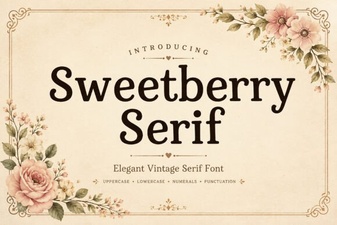 Sweetberry Serif Font: Elegant Typography for Modern Projects
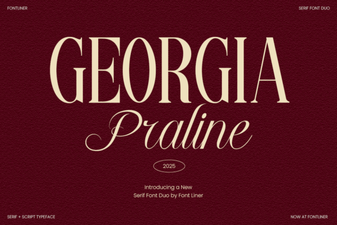 Georgia Praline: Font for Handcrafted Designs
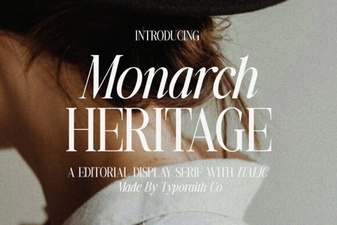 Monarch Heritage Font for Elegant Design Projects
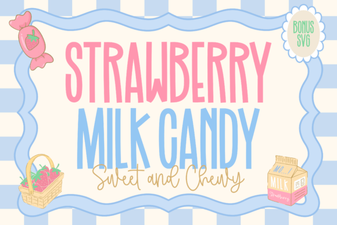 Sweet & Stylish Fonts for Design Projects
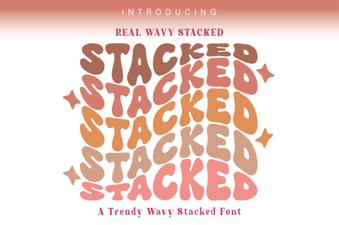 Wavy Stacked Fonts for Design Projects
 Black Sample Font: Your Creative Typography Starter Kit