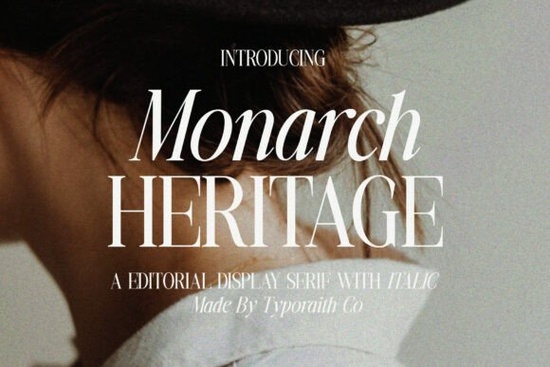
If you need a typeface that reads clearly while still feeling expensive, a well-crafted display serif is usually the smartest starting point. The Monarch Heritage Font falls into that category by balancing sharp editorial contrast with soft, sweeping curves. Designers who work on boutique packaging, wedding stationery, or fashion posters often reach for this style because it brings quiet authority to headlines without overpowering supporting text. It fits comfortably alongside minimalist layouts, letting the typography carry its own weight while remaining highly legible across various mediums.
Why does a modern serif suit premium branding so well?
High-end visual storytelling relies on subtle hierarchy rather than loud ornamentation. This typeface delivers that through measured stroke variation and open letterforms that stay crisp at smaller sizes. When placed alongside photography or clean backgrounds, the font anchors the composition instead of competing with it. Crafters and small business owners frequently use it for logo lockups, product labels, and social media headers because the contrast catches the eye without demanding aggressive attention. Leave breathing room around wide set lines, and negative space handles most of the visual balance.
How do the Regular and Italic weights interact?
The two core styles provide enough flexibility to build rhythm across spreads or campaign graphics. The Regular carries steady, forward-moving energy suitable for pull quotes and subheadings, while the Italic introduces a gentle slant that guides the reader through longer copy. You can alternate them to separate information layers, or lean on the Italic exclusively when drafting romantic or heritage-focused messaging. Both cuts share the same structural DNA, so switching between them never breaks continuity. If you ever need a complementary option, checking out the Georgia Praline Font or browsing the Luxurimo Typeface collection gives you enough variety to maintain consistency without repeating yourself.
Where should you apply this typeface in everyday projects?
This font adapts cleanly to several commercial and personal workflows. Magazine editors trust it for cover lines and chapter breaks because the high x-height reads sharply against busy visuals. Print-on-demand sellers use it for apparel graphics and tote prints since the geometric foundation stays crisp after scaling. Wedding designers pair it with foil stamping or blind debossing to achieve tactile elegance that photographs well. Creative portfolio sites drop it over dark backgrounds for instant depth, while fashion posters benefit from the italic version’s built-in motion effect.What sets it apart from other editorial serifs?
Many display fonts chase extreme thickness or wide spacing, which quickly ages in trend cycles. This one holds onto restraint, using controlled terminals and slightly elongated proportions to feel current without following novelty. The character set includes standard ligatures, punctuation marks, and lining numerals that align neatly for price tags or ingredient lists. Heavy slabs or delicate hairlines require constant kerning fixes, whereas this middle-ground approach reduces layout friction. Creators who prefer rounded accents might also keep the Sweetberry Serif Typeface handy for secondary highlights, leaving the main display work to more authoritative cuts.Which technical details matter before you start designing?
Checking file compatibility upfront saves troubleshooting time. Look for OpenType and TrueType packages, clean vector outlines, and broad language support if you plan to publish internationally. Most creators import the font directly into design software, then adjust tracking by minus three percent for tighter headlines. Proof your colors on both screens and physical samples, since fine serifs lose definition when ink spreads or pixels render at low resolution. You can verify current package contents and licensing terms by visiting Monarch Heritage Font to review the official resource page.Quick implementation checklist
- Set baseline grid: Use 8pt or 10pt multiples to keep vertical rhythm aligned.
- Adjust optical margins: Tighten side padding by 3% so curved letters sit evenly inside frames.
- Limit pairings: Stick to one display serif per layout; use simple sans or scripts for captions.
- Proof at actual size: Check both web mockups and print proofs before locking files.
- Embed or outline: Convert text to paths for cutting machines to avoid font substitution.
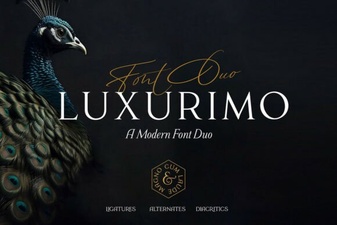 Luxurimo Font: Elegant Typography for Creative Projects
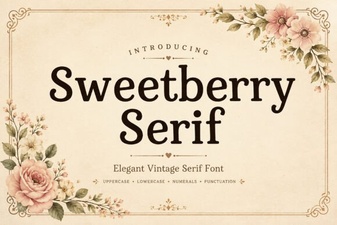 Sweetberry Serif Font: Elegant Typography for Modern Projects
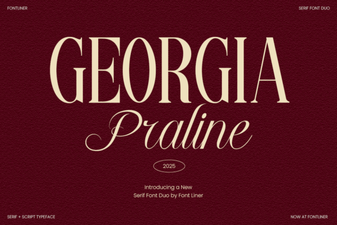 Georgia Praline: Font for Handcrafted Designs
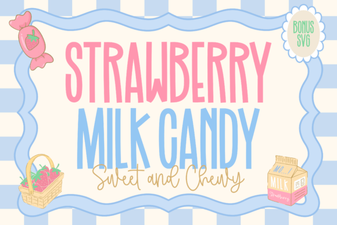 Sweet & Stylish Fonts for Design Projects
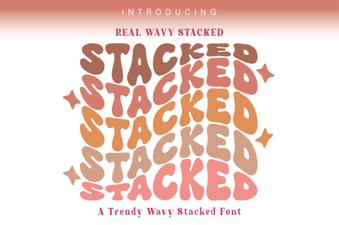 Wavy Stacked Fonts for Design Projects
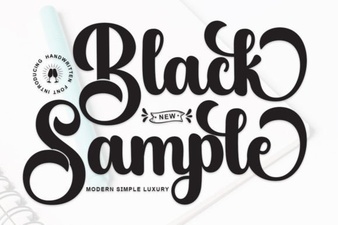 Black Sample Font: Your Creative Typography Starter Kit